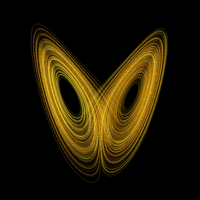
Before my teacher came to me, I did not know that I am. I lived in a world that was no-world. I cannot hope to describe adequately that unconscious, yet conscious time of nothingness...Since I had no power of thought, I did not compare one mental state with another.
Helen Keller, 1908
...real being or nothingness?
26 November 2005


25 November 2005
a difference...
It's a beautiful thing, the destruction of words. Of course the great wastage is in the verbs and adjectives... It isn't only the synonyms: there are also the antonyms. After all, what justification is there for a word which is simply the opposite of some other word? A word contains its opposite in itself. Take 'good', for instance. If you have a word like 'good', what need is there for a word like 'bad'? 'Ungood' will do just as well - better, because it's an exact opposite, which the other is not.
Orwell, George, Nineteen Eighty-Four, [1949] 1989, 54.
...no matter how miniscule, is still a difference.
Orwell, George, Nineteen Eighty-Four, [1949] 1989, 54.
...no matter how miniscule, is still a difference.
24 November 2005
reality, what a concept...
For we shall maintain that no statement which refers to a "reality" transcending the limits of all possible sense-perception can possibly have any literal significance; from which it must follow that the labours of those who have striven to describe such a reality have all been devoted to the production of nonsense.
A.J. Ayer, Language, Truth, and Logic, 1936, 34
"...limits of sense-perception?"
A.J. Ayer, Language, Truth, and Logic, 1936, 34
"...limits of sense-perception?"
20 November 2005
concept of infinitesimals...
The Dichotomy: There is no motion, because that which is moved must arrive at the middle before it arrives at the end, and so on ad infinitum.
The Achilles: The slower will never be overtaken by the quicker, for that which is pursuing must first reach the point from which that which is fleeing started, so that the slower must always be some distance ahead.

The Arrow: If everything is either at rest or moving when it occupies a space equal to itself, while the object moved is always in the instant, a moving arrow is unmoved.
The Stadium: Consider two rows of bodies, each composed of an equal number of bodies of equal size. They pass each other as they travel with equal velocity in opposite directions. Thus, half a time is equal to the whole time.
Zeno of Elea's "Paradoxes," in Aristotle, Physics VI:9, 239b15
...can no time and no space exist?
The Achilles: The slower will never be overtaken by the quicker, for that which is pursuing must first reach the point from which that which is fleeing started, so that the slower must always be some distance ahead.
The Arrow: If everything is either at rest or moving when it occupies a space equal to itself, while the object moved is always in the instant, a moving arrow is unmoved.
The Stadium: Consider two rows of bodies, each composed of an equal number of bodies of equal size. They pass each other as they travel with equal velocity in opposite directions. Thus, half a time is equal to the whole time.
Zeno of Elea's "Paradoxes," in Aristotle, Physics VI:9, 239b15
...can no time and no space exist?
13 November 2005
noumena...
Sect. 32. Since the oldest days of philosophy inquirers into
pure reason have conceived, besides the things of sense, or
appearances (phenomena), which make up the sensible world,
certain creations of the understanding (Verstandeswesen), called
noumena, which should constitute an intelligible world. And as
appearance and illusion were by those men identified (a thing
which we may well excuse in an undeveloped epoch), actuality was
only conceded to the creations of thought.
And we indeed, rightly considering objects of sense as mere
appearances, confess thereby that they are based upon a thing in
itself, though we know not this thing in its internal
constitution, but only know its appearances, viz., the way in
which our senses are affected by this unknown something. The
understanding therefore, by assuming appearances, grants the
existence of things in themselves also, and so far we may say,
that the representation of such things as form the basis of
phenomena, consequently of mere creations of the understanding,
is not only admissible, but unavoidable.
Our critical deduction by no means excludes things of that
sort (noumena), but rather limits the principles of the Aesthetic
(the science of the sensibility) to this, that they shall not
extend to all things, as everything would then be turned into
mere appearance, but that they shall only hold good of objects of
possible experience. Hereby then objects of the understanding are
granted, but with the inculcation of this rule which admits of no
exception: "that we neither know nor can know anything at all
definite of these pure objects of the understanding, because our
pure concepts of the understanding as well as our pure intuitions
extend to nothing but objects of possible experience, consequently
to mere things of sense, and as soon as we leave this sphere these
concepts retain no meaning whatever."
Kant, Immanuel, Prolegomena to Any Future Metaphysics, 1783.
nou*me*non, |noōmə,nån|
noun (pl. na |nə|)
a thing as it is in itself, as distinct from a thing as it is knowable by the senses through phenomenal attributes.
Oxford American Dictionariese
"...that we neither know nor can know anything at all... and as soon as we leave this sphere these concepts retain no meaning whatever...?"
...can I know "nothing," if I am not by its sphere nor cannot sense it?
12 November 2005
the other belongs to me...
The other, in so far as he is other, only exists for me in so far as I am open to him, in so far as he is a Thou. But I am only open to him in so far as I cease to form a circle with myself, inside which I somehow place the other, or rather his idea; for inside this circle, the other becomes the idea of the other, and the idea of the other is no longer the other qua other, but the other qua related to me…
Gabriel Marcel, Being and Having, 1949, p. 107
...does existence depend on the other?
Gabriel Marcel, Being and Having, 1949, p. 107
...does existence depend on the other?
11 November 2005
another koan...
The Stone Mind
Hogen, a Chinese Zen teacher, lived alone in a small temple in the country. One day four traveling monks appeared and asked if they might make a fire in his yard to warm themselves.
While they were building the fire, Hogen heard them arguing about subjectivity and objectivity. He joined them and said: "There is a big stone. Do you consider it to be inside or outside your mind?"
One of the monks replied: "From the Buddhist viewpoint everything is an objectification of mind, so I would say that the stone is inside my mind."
"Your head must feel very heavy," observed Hogen, "if you are carrying around a stone like that in your mind."
...does the stone mind?
09 November 2005
words...
Section 29. Words. I have copiously enough spoken of the abuse of words in another place [071] and therefore shall upon this reflection, that the sciences are full of them, warn those that would conduct their understandings right not to take any term, howsoever authorized by the language of the schools, to stand for any thing till they have an idea of it. A word may be of frequent use and great credit with several authors and be by them made use of as if it stood for some real being; but Met, if he that reads cannot frame any distinct idea of that being, it is certain[ly] to him a mere empty sound without a meaning, and he learns no more by all that is said of it or attributed to it than if it were affirmed only of that bare empty sound. They who would advance in knowledge and not deceive and swell themselves with a little articulated air should lay dolor this as a fundamental rule, not to take words for things nor suppose that names in boozes signify real entities in nature till they can frame clear and distinct ideas of those entities. It will not perhaps be allowed if I should set down "substantial forms" and "intentional species" [072] as such that may justly be suspected to be of this kind of insignificant terms. But this I am sure, to one that can form no determined ideas of Chat they stand for they signify nothing at all; and all that he thinks he knows about them is to him so much knowledge about nothing and amounts at most but to a learned ignorance. It is not without all reason supposed that there are many such empty terms to be found in some learned writers, to which they had recourse to etch [073] out their so stems where their understandings could not furnish them with conceptions from things. But yet I believe the supposing of some realities in nature answering those and the like words have much perplexed some and quite misled others in the study of nature. That which in any discourse signifies "I know not what" [074] should be considered "I know not when." Where men have any conceptions, they can, if they are never so abstruse or abstracted, explain them and the terms they use for them. For our conceptions being nothing but ideas, which are all made up of simple ones, [075] if they cannot give us the ideas their words stand for, it is plain they have none. To what purpose can it be to hunt after his conceptions who has none or none distinct? He that knew not what he himself meant by a learned term cannot make us know anything by his use of it, let us beat our heads about it never so long. Whether we are able to comprehend all the operations of nature and the manners of them, it matters not to enquire; but this is certain, that we can comprehend no more of them than we can distinctly conceive; and therefore to obtrude terms where Me have no distinct conceptions, as if they did contain or rather conceal something, is but an artifice of learned vanity to cover a defect in a hypothesis or our understandings. Words are not made to conceal, but to declare and show something; where they are, by those who pretend to instruct, otherwise used, they conceal indeed something; but that they conceal is nothing but the ignorance, error or sophistry of the talker, for there is, in truth, nothing else under them.
John Locke, Of the Conduct of the Understanding, 1706, Edited by F. W. Garforth.
...belong only to the speaker?
John Locke, Of the Conduct of the Understanding, 1706, Edited by F. W. Garforth.
...belong only to the speaker?
07 November 2005
representation...
"[O]ne must distinguish the Object as it is represented, which is called the Immediate Object, from the Object as it is in itself. The latter is purely active in the representation. That is, it remains in all respects exactly as it was before it was represented. It is true that the purpose of representing an Object is usually, if not always, to modify it in some respect. But by the Object Itself, or the Real Object, we mean the Object insofar as it is not modified by being represented."
C.S. Pierce, On Signs, MS 793:14, not dated
...objectively real?
C.S. Pierce, On Signs, MS 793:14, not dated
...objectively real?
03 November 2005
conceptual vagueries...
The nominalist and conceptualist schools regard concepts as subjective, i.e., as products of man's consciousness, unrelated to the facts of reality, as mere "names" or notions arbitrarily assigned to arbitrary groupings of concretes on the ground of vague, inexplicable resemblances.
Ayn Rand, 1990. Introduction to Objectivist Epistemology. Second Edition. New York: Meridian.
"notion" from the Latin notus 'known'
...vague notions? ...known reality? ...facts? or just plain 'inexplicable?'
Ayn Rand, 1990. Introduction to Objectivist Epistemology. Second Edition. New York: Meridian.
"notion" from the Latin notus 'known'
...vague notions? ...known reality? ...facts? or just plain 'inexplicable?'
02 November 2005
formulaic insignificance...
Nonlinearity means the non-superposition of factors or effects; it means there are terms like
X², 2mxy, byz
in the equations, in which x, y and z are variables, b and m are parameters. Nonlinearity is a necessary, but not sufficient condition for the appearance of chaos. Chaos motions must come from a nonlinear system but nonlinearity does not necessarily imply chaos. Piecewise nonlinearity is not equal to linearity.
"A Brief History of the Concept of Chaos", Huajie Liu, (Department of Philosophy, Peking University, 100871, Beijing, P.R.China), 1999-04-12
...or an expression of order?
31 October 2005
no essence...
Individual men who are separate from each other, while they differ both in their own essences and in their own forms ... nevertheless agree in this: that they are men. I do not say that they agree in man, since a man is not any thing unless it is a distinct man. Rather I say in being a man. Being a man is not a man nor any thing if we consider the matter carefully.... We mean merely that they are men and do not differ at all in this regard, that is, not in as much as they are men, although we call on no essence....
...Now it seems we should stay away from accepting the agreement among things according to what is not any thing — it's as though we were to unite in nothing things that now exist! — namely, when we say that this [human] and that one agree in the human status, that is to say: in that they are human. But we mean precisely that they are human and don't differ in this regard — let me repeat: [they don't differ] in that they are human, although we're not appealing to any thing [in this explanation]....
Logica ‘ingredientibus’, Pierre Abelard du Pallet, d. 1142
...separate or separated?
28 October 2005
looking for answers...
The important thing is not to stop questioning.
~ Albert Einstein
...will someone let me know if they find an answer?
... and then ask me if I trust it?
~ Albert Einstein
...will someone let me know if they find an answer?
... and then ask me if I trust it?
25 October 2005
a temptation...
Now I am tempted to say that the right expression in language for the miracle of the existence of the world, though it is not any proposition in language, is the existence of language itself. But what then does it mean to be aware of this miracle at some times and not at other times? For all I have said by shifting the expression of the miraculous from an expression by means of language to the expression by the existence of language, all I have said is again that we cannot express what we want to express and that all we can say about the absolute miraculous remains nonsense.
Lecture on Ethics, Ludwig Wittgenstein, 1929
...and language exists?
Lecture on Ethics, Ludwig Wittgenstein, 1929
...and language exists?
24 October 2005
limited consideration...
This actual world of what is knowable, in which we are and which is in us, remains both the material and the limit of our consideration.
Arthur Schopenhauer, World as Will and Representation, vol. i, pg. 273, (E.F.J. Payne Translation)
...actual? ...knowable?
Arthur Schopenhauer, World as Will and Representation, vol. i, pg. 273, (E.F.J. Payne Translation)
...actual? ...knowable?
23 October 2005
what a concept...
Man is the place at which and through which everything that is real exists for us at all. To fail to be human would mean to slip into nothingness.
Karl Jaspers, "On My Philosophy," Existentialism from Dostoyevsky to Sartre, edited by Walter Kaufman.
...but, what is real?
Karl Jaspers, "On My Philosophy," Existentialism from Dostoyevsky to Sartre, edited by Walter Kaufman.
...but, what is real?
19 October 2005
the abode...
Language is the house of Being.
Letter on Humanism, Martin Heidegger, 1947, p. 217
...who created the house?
Letter on Humanism, Martin Heidegger, 1947, p. 217
...who created the house?
11 October 2005
a dialogue...
I have been having with myself.
There is, despite evidence to the contrary, a method to what I have been posting. It is both existential and chaotic and it is not. Until this point, I have not made an entry of my own on this blog with the exception of comments about the contents of a post or a question about some entry's gist. That is until today....
Though I had not intended to write an entry of my own at this point, because of some things happening in my life, the following is a dialogue I have been having with myself and I find a need to include it in this blog.
I had a major breakthrough on my way home from work about my "almost, probable, certain future." I feel like I'm "stuck" at work because of "external circumstances," eg not having the connections that others have, the plethora of a club of administrators who take care of each other first, or being too qualified compared to others, when, actually, I am making it my "almost, probable, certain future" based on the past. I'm not believing that anything is possible because the past is in front of me not behind me. There should not be an almost, probable, certain future; there are only endless possibilities because nothing exists in the future except things I create. The past has already been created and exists no more.
No matter how many times I tell this to myself [and it has been for years and years] it is difficult to always keep it in perspective.
I do not believe that anything exists. Anything. Existence is predicated on language. Everything must be distinguished by language. Language is what makes anything exist because I name it as such, yet I still can't prove that anything exists.
We have a set of common distinctions about objects. We call a chair a chair because of the language we use to describe it or, rather, what language we decided to use to describe its existence.
It is a task teaching kids how to read because language itself is a creation. A creation that is actually foreign to the functioning of the brain processes. No one has ever been able to explain how we learn to read. There are many theories that explain the various steps but none that explain how. Yet, we are driven to learn how to read - and write.
The artist George Seurat is attributed with a phrase: "A blank canvas. So many possibilities." Endless possibilities not based on an "almost, probable, certain future" but on nothing that previously existed on the blank canvas. What is interesting is that Seurat's art was known as pointilism, a blending of dots that are so close together that they give depth, color, perspective and emotion. In addition, there is a scientific and mathematical basis to this form of art since it deals with an optical mixture based on light. This explanation, of course, is based on the distinctions we make based on language that is a creation itself and may not exist.
So, if "nothing exists," or the antithesis that is an "almost, probable, certain future" does not exist, we have to understand that we have the possibility of creating anything and everything from nothing.
so many possibilities...
10 October 2005
jumping together...
"The Consilience of Inductions takes place when an Induction, obtained from one class of facts, coincides with an Induction obtained from another different class. Thus Consilience is a test of the truth of the Theory in which it occurs."
The Philosophy of the Inductive Sciences, William Whewell, 1840
...are all things connected?
The Philosophy of the Inductive Sciences, William Whewell, 1840
...are all things connected?
09 October 2005
definitions...
Absolute nonexistence: The absence of existence, the absence of nothingness, and the absence of absence. It is what is not being referred-to under any circumstances. Its definition is that which cannot be referred-to, named, or defined. It is the non-state to which everything including nothingness is attracted.
Chaos Theory: The study and mathematical modeling of complexity in natural systems.
Complexity: The characteristic of a system endowing it with the capacity for infinite variation of motion and form.
Dis-equilibrium: A disturbance in absolute nonexistence. It is a result of the fundamental asymmetry between nothingness, absolute nonexistence and temporal existence.
Disordered Complexity: Random chaotic motion within a system either moving towards or coming from ordered complexity.
Energy: Motion; which is the detectable change in spatial relationships between the components of a given system and the means of redistribution of space and matter. Energy is also the measure of all the forms of repulsion and attraction between space and matter (known as potential energy).
Environment: The immediate surroundings of a given system from which the system comes, upon which it is dependent, and to which it will return its component parts.
Evolution: The universal progressive pattern of the exchange of disordered complexity for ordered complexity in all natural systems. It is the orderly increasing delineation of a system from its environment.
Existence: The set of circumstances in which it is possible for humans to maintain sentient consciousness of self and time. Existence is independent of temporality by virtue of its infinite nature except in the context of its temporal phase (see Temporal Existence).
Force: That which initiates or changes motion.
Gravity: The space/time gradient caused by the bending of space/time towards mass/density. It is therefore also the measure of mass/density (referred to as the specific gravitational density of a given area of matter).
Matter: The absence of space. It is attracted to space and repelled by itself.
Mass: The aspect of matter detectable by measurement.
Motion: The detectable change in spatial relationships between the components of a given system. Also see “energy” (above).
Nothingness: A state of perfectly uniform static equilibrium constituting relative nonexistence. A state that exists relative to absolute nonexistence but does not exist relative to temporal existence.
Ordered Complexity: A consistent pattern of arrangement of the elements of a system in relation to each other that is infinitely variable and that accrues from or dissolves to the disordered phase of those elements (see Disordered Complexity).
Particle: A discrete unit of matter with consistent characteristics unless divided or fused.
Physics: The study of motion
Relative Nonexistence: Nothingness; a state of uniform, static equilibrium undetectable by humans due to the absence of spatial/temporal dynamics.
Space: The absence of matter. It is attracted to matter and repelled by itself.
Stimulus: An electrochemical alteration of the dynamic basil or "resting" equilibrium of an organic system
System: Elements interacting with each other and delineated from their surroundings.
Temporal existence: The constraint of infinite time and space within which human beings can exist. A state delineated from nothingness by virtue of non-uniformity and whose components are attracted to nothingness. It is the dynamic phase of existence whereas nothingness is non-temporal and non-dynamic.
Time: is the measure of the universal progression of uniformity between matter and space accomplished by counting equal, standardized divisions of a cyclical system of regular motion.
Universe: The manifestation of temporal existence – composed of matter, energy, space, and time. It is anything that is or ever will be detectable by human beings. It is the macro-system of which all natural systems are a sub-set.
Nothingness Theory: The connection between the evolution of the universe and human thought, Corey Kaup, 1989 – 2005
...existentionally chaotic improvability?
Subscribe to:
Posts (Atom)